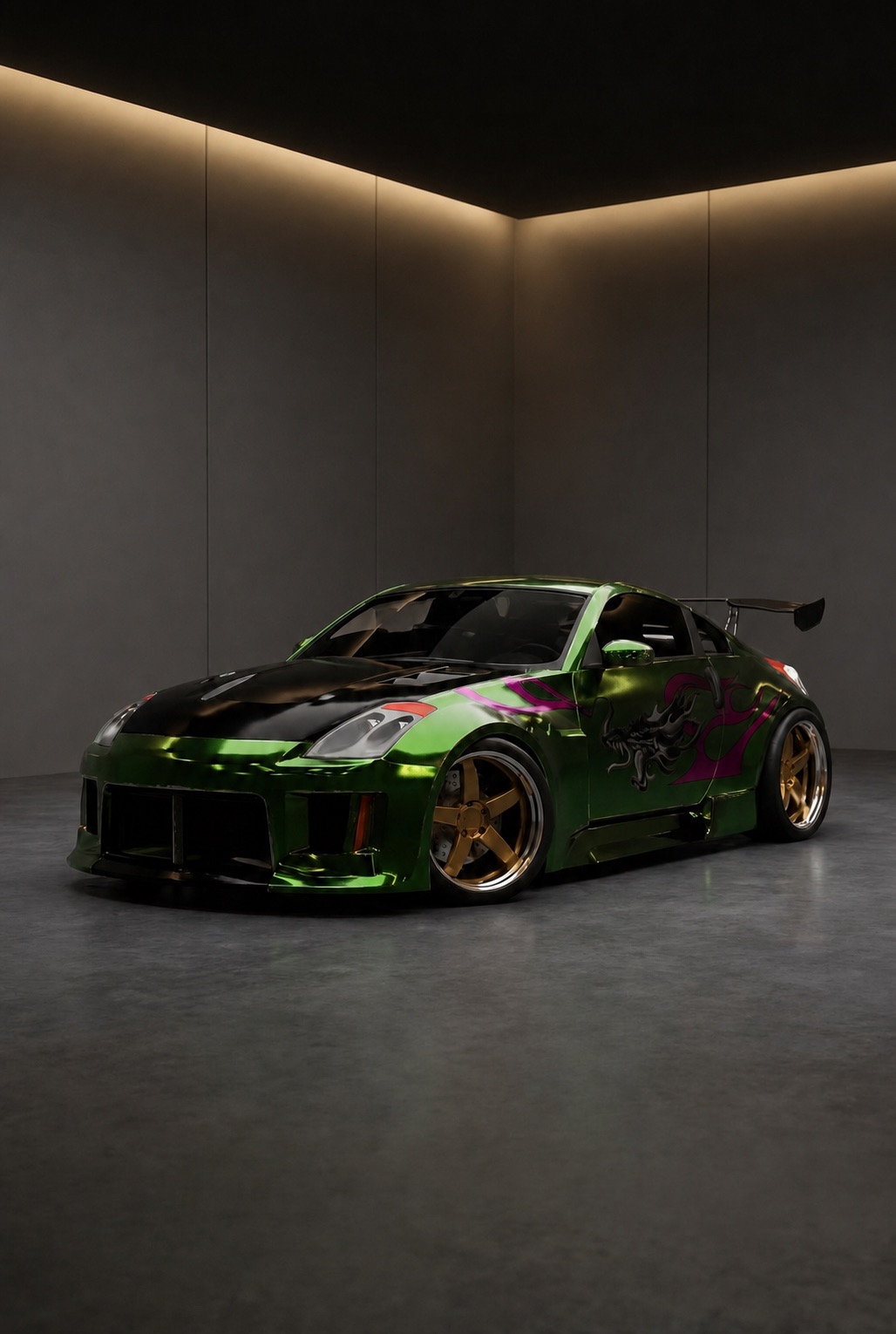
Most wheel simulators swap a rim on a catalogue car and stop there. The thing you are actually buying is a corner: wheel, tyre, arch gap and finish, all reading against your paint at once.
Spoke pattern is the easy part, and the part every simulator gets right. What decides whether a set works is everything around it — and that only exists on your car.
01
The tyre is half the look
Sidewall height changes a set more than the spokes do. The same wheel on a taller tyre reads as a comfortable daily; on a thin one it reads as a track car. A simulator that renders the whole corner shows you which one you are buying.
02
Arch gap is the deciding number
How much daylight sits above the tyre is what people notice from across a car park. That gap depends on your springs and your car, so it cannot be simulated on a factory example on factory suspension.
03
Compare, do not audition one at a time
Nobody decides on the first set. Simulating four and putting the shortlist side by side on the same photo is a faster route to an answer than looking at each one in isolation a week apart.
FROM CAMERA ROLL TO TUNE BAY
RUN THE SIMULATION
One photo, then as many sets as you want to argue about.
01
Photograph the car once
A three-quarter shot with the wheels visible is enough. Every set you simulate from then on lands on that same photo.
02
Simulate a few sets, not one
Work through mesh, split-spoke, deep-dish and multi-piece designs across bronze, black, gunmetal and polished finishes.
03
Shortlist, then confirm the numbers
Keep the two or three that survive in your garage, then take diameter, width and offset to your wheel shop.
BEFORE YOU PULL IN
WHEEL SIMULATOR FAQ
01Is this a wheel simulator I can use with my own car?+
Yes, that is the whole design. Instead of choosing a year, make and model from a list, you upload one photo of your car and every set is simulated onto it.
02Does it simulate the tyre as well as the wheel?+
Yes. The render covers the whole corner, so the sidewall and the way it meets the arch are part of the preview rather than an afterthought.
03How is a simulator different from a fitment calculator?+
A fitment calculator answers whether a wheel physically fits — offset, clearance, rubbing. A simulator answers whether it looks right. You need both, in that order: settle the look here, confirm the numbers with your supplier.
04Can I simulate wheels on a car that is already modified?+
Yes, and that is where stock-model simulators fall down. A car that is already lowered or already on aftermarket wheels no longer matches any catalogue image, but it photographs perfectly well.